The Filament Dryer Electricity Myth: What Power Meters Actually Measure
A dedicated heated filament dryer consumes an average of only 38W to 55W during steady-state PID regulation, costing just $0.04 to $0.05 per 6-hour drying cycle.
A persistent misconception among 3D printing operators is that operating a heated filament dryer continuously will dramatically inflate the workshop’s electric bill. Because dryer specification plates indicate peak ratings (e.g., 100W or 150W), operators assume constant maximum power draw.
In physical workshop measurements using calibrated power meters, filament dryers only pull peak wattage for the first 12–18 minutes during initial chamber preheating. Once the internal chamber reaches operating temperature (50°C–70°C), thermal insulation and PID duty cycling reduce average cruising power to between 38W and 55W. A full 6-hour drying cycle consumes merely 0.25 to 0.33 kWh of electricity—costing less than a nickel in most regions.
- Initial Preheating Phase (10–18 min): Peak draw of 90W–120W to reach target chamber temperature.
- Cruising PID State (Remaining 5+ hours): Modulated power consumption oscillating between 35W and 55W.
- Net Energy per Cycle: 0.25 to 0.35 kWh total electricity draw for a standard 6-hour active drying cycle.
Hydrolysis, Stringing & Scrap: The Financial Destruction of Wet Polymer
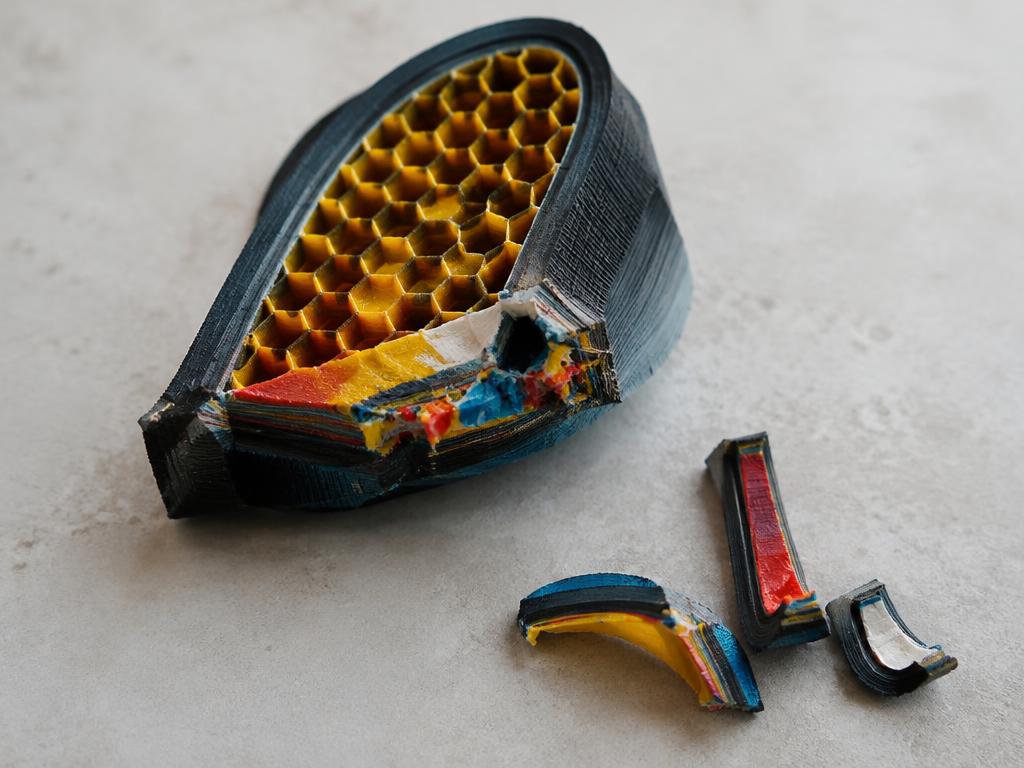
Wet filament boils inside the hotend nozzle, triggering chemical hydrolysis that cuts tensile strength by 30% and causes $15 to $40 in deburring labor and scrapped parts.
When moisture-laden filament enters a hotend at 220°C–280°C, trapped water molecules instantly vaporize into micro-steam pockets. The expanding steam causes audible popping, irregular extrusion widths, and severe stringing webs across outer part walls.
More dangerously, for polyamides (Nylon), polyesters (PETG), and polyurethanes (TPU), the combination of extreme heat and water causes molecular chain scission (hydrolysis), permanently destroying the material’s structural integrity. Spending $0.04 on electricity saves an average of $20.00 in scrapped engineering prints and 15 minutes of manual stringing cleanup.
FXTechnical Breakdown · How InfillQuote calculates this behind the scenes (View formula)▼
\text{Cost}_{\text{drying}} = \left( \frac{\text{Average Watts}}{1000} \times \text{Drying Hours} \right) \times \text{Electricity Rate (kWh)}A 45W average cruising dryer running for 6 hours at $0.15/kWh: (45 / 1000 × 6) × $0.15 = 0.27 kWh × $0.15 = $0.0405 total electricity cost.
| Polymer Type | Drying Cycle | Energy (kWh & $) | Energy (BRL & EUR) | Moisture Scrap & Labor Loss | Consequences of Un-Dried Printing |
|---|---|---|---|---|---|
| PLA / PLA Silk | 50°C for 4 hours | 0.18 kWh (~$0.03) | R$ 0,15 / €0.03 | $5.00–$12.00 (R$ 15–35 / €4–10) | Brittle filament snaps inside AMS feeders; dull finish on silk spools. |
| PETG / PETG-CF | 65°C for 6 hours | 0.28 kWh (~$0.04) | R$ 0,25 / €0.05 | $8.00–$18.00 (R$ 20–45 / €7–15) | Heavy spiderweb stringing; +15 min manual heat-gun & deburring labor. |
| TPU 95A | 60°C for 8 hours | 0.36 kWh (~$0.05) | R$ 0,32 / €0.06 | $15.00–$35.00 (R$ 45–90 / €12–30) | Micro-void surface bubbles; layer delamination; 100% part scrap. |
| ABS / ASA | 70°C for 6 hours | 0.32 kWh (~$0.05) | R$ 0,29 / €0.06 | $12.00–$25.00 (R$ 35–65 / €10–22) | Internal steam voids; severe layer separation and corner bed warping. |
| Nylon PA-CF / PC | 80°C for 10 hours | 0.65 kWh (~$0.10) | R$ 0,62 / €0.12 | $25.00–$75.00+ (R$ 70–200+ / €22–65+) | Complete mechanical embrittlement; failed functional parts; costly reprints. |
Table: Drying Energy Cost vs. Financial Loss from Moisture Across 5 Core Polymers
Note: Scrap losses include wasted filament mass, machine hours, and manual workbench rework.
Accounting for Active Dryers & Storage Silica in InfillQuote Workshop Rates
Incorporate drying costs either as +45W added to machine cruising wattage during direct-feed printing, or as a nominal $0.10/spool batch prep charge.
Integrating drying into your pricing workflow is straightforward. When printing technical materials directly from an active drying chamber, simply increase the printer’s cruising power setting in InfillQuote by 45W (e.g., configuring 165W instead of 120W).
Alternatively, if your workshop dries spools in batch ovens or multi-spool dry boxes and stores them in airtight containers with color-indicating silica gel, allocate a flat $0.10 to $0.15 preparation fee per spool in your filament database. This minor charge fully funds silica regeneration energy and dryer depreciation.
- Direct Feed Printing: Add +45W to printer operating power when extruding straight out of a heated dryer.
- Batch Prep Surcharge: Add a nominal $0.10 per spool into catalog pricing to cover pre-drying and vacuum bags.
- Silica Gel Protocol: Store dried spools in sealed bins with rechargeable desiccant beads to maintain <= 15% RH.
Frequently Asked Questions
Why do brand-new, factory vacuum-sealed filament spools frequently arrive wet?
Filament extrusion manufacturing lines cool the extruded polymer strand in water baths immediately before spool winding. If cooling water is not completely blown off by high-pressure air knives, residual moisture gets trapped within the spool wraps and sealed into the packaging bag.
What is the operational difference between silica gel desiccant and an active thermal dryer?
Silica gel is passive prevention: it absorbs moisture from ambient air to maintain a low relative humidity environment, but cannot break water molecules bonded to polymer chains. An active thermal dryer uses heat and forced airflow to drive moisture out of deep spool layers.
How do I incorporate drying electricity costs inside InfillQuote?
Add 45W to your machine’s power consumption profile in InfillQuote when printing directly from a dryer, or add $0.10 to $0.20 to the spool catalog cost for pre-dried materials. The pricing engine automatically includes the energy in your quotes.