The Two-Dollar Part Paradox: The Hidden Transactional Cost of Small Prints
Quoting small 5-gram parts solely by plastic multiplier generates guaranteed financial losses because fixed customer communication, slicing, bed prep, and packing consume 20–30 minutes.
A prospective client reaches out requesting a small 6-gram replacement gear or bracket. The raw filament costs $0.15, electricity is $0.02, and printing takes 22 minutes. An amateur workshop using a generic "3x material markup" quotes the piece for $1.00 to $2.00, believing they earned a healthy margin.
In reality, reviewing the client’s message, checking the STL mesh for non-manifold errors, heating the build plate, applying adhesive, removing the part, packaging it, and handling payment takes 20 to 25 minutes of active human attention. Factoring your $37.14/h bench rate, that "profitable" $2.00 print just cost you $15.00 in labor, creating a severe operational deficit.
- Transactional Communication: Answering Direct Commercial Messages, clarifying specs, and issuing invoices.
- File Validation & Slicing: Verifying wall thicknesses, manifold geometry, and orienting layer seams.
- Physical Bench Setup: Bed cleaning, nozzle purging, part harvesting, and packaging materials.
The Minimum Order Floor Formula & Batch Anchoring Strategy
Every quotation must enforce a Minimum Order Floor ($18–$25 / R$ 45–60) for single parts, anchoring the client toward multi-unit batches that dilute the fixed setup.
A Minimum Order Floor eliminates micro-transaction losses while training customers to value workshop setup time. Instead of rejecting single small parts, present the client with a professional choice: pay the minimum floor for 1 unit, or receive 5 to 10 units for a slightly higher total amount.
Because fixed setup minutes (mesh prep, slicer setup, plate warm-up) occur only once, printing 10 units on the same plate adds negligible marginal labor while substantially increasing revenue and customer perceived value.
FXTechnical Breakdown · How InfillQuote calculates this behind the scenes (View formula)▼
\text{Floor}_{\text{min}} = (\text{Setup Minutes} \times \text{Labor Rate/min}) + \text{Packaging} + \text{Base Margin}For a 20-minute setup at $0.62/min with $1.50 packaging and $4.00 base margin: (20 × $0.62) + $1.50 + $4.00 = $12.40 + $5.50 = $17.90 minimum order floor.
| Quotation Approach | Client Price | Actual Workshop Cost | Net Financial Outcome | Commercial Dynamics & Volume |
|---|---|---|---|---|
| Amateur Mistake (Weight Markup Alone) | $1.00 (R$ 5,00 / €1.00) | $8.25 (R$ 21,20 / €7.50) | -$7.25 Loss (-R$ 16,20) | Severe financial loss; client treats the workshop as an unpaid hobbyist. |
| Option A: Single Part with Minimum Floor | $18.00 (R$ 45,00 / €16.00) | $8.25 (R$ 21,20 / €7.50) | +$9.75 Profit (+R$ 23,80) | Client pays for the true transactional setup; workshop covers all labor. |
| Option B: Batch Anchoring (10 Units) | $32.00 (R$ 79,00 / €29.00) | $13.50 (R$ 34,00 / €12.50) | +$18.50 Profit (+R$ 45,00) | $3.20/unit; client perceives high value while single setup is diluted across 10 pcs. |
Table: Commercial Comparison: 3 Pricing Approaches for a 6g Small Part
Note: All figures include active human labor, packaging, electricity, and material.
Separating CAD Engineering from Physical Manufacturing in Proposals
CAD design and reverse engineering must be contracted as distinct line items in your PDF proposal, retaining ownership over source .STEP/.STL files unless an IP buyout is paid.
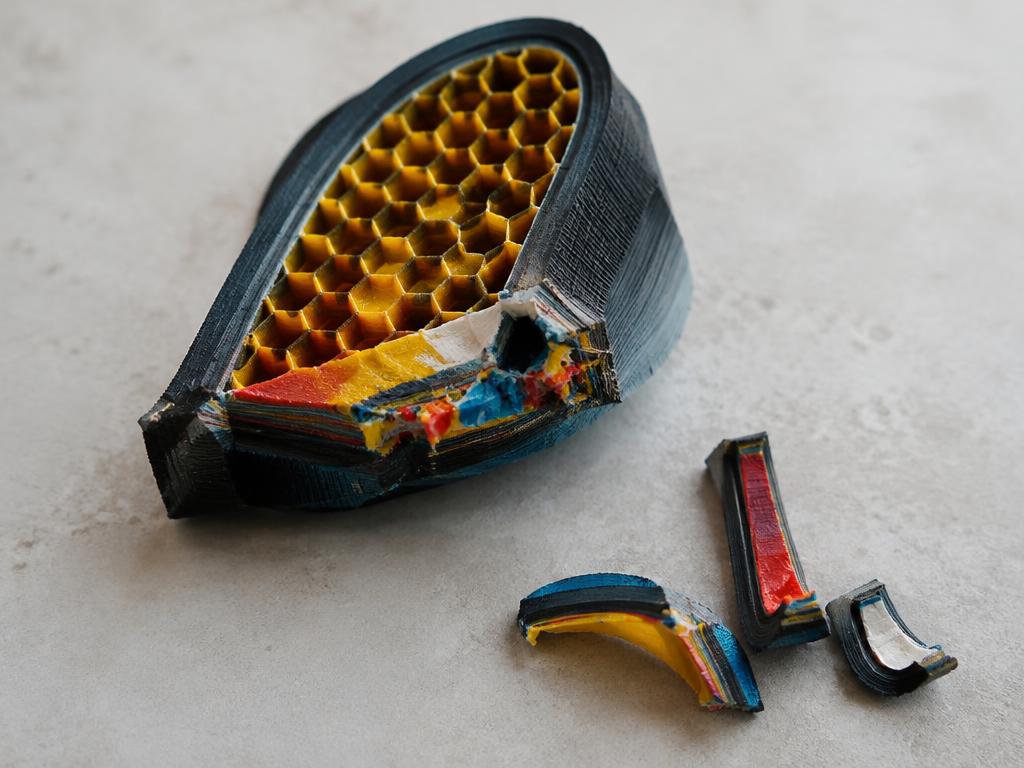
A frequent source of conflict in 3D printing is clients who bring a broken plastic part, expect the workshop to reverse-engineer it with digital calipers for free, and then demand the native CAD file after paying $15 for the print.
Physical additive manufacturing and parametric digital engineering are fundamentally separate disciplines. Your PDF proposals should clearly distinguish "Manufacturing Services" from "CAD Engineering & Digital Tooling". Unless the client pays a specific digital file buyout fee, the design files remain the intellectual property of your studio.
- Distinct Proposal Line Items: Clearly separate "CAD Modeling & Reverse Engineering" from "3D Print Manufacturing".
- Digital IP Protection: Retain ownership over native .STEP and .STL files by default; offer full file buyouts as an explicit line item.
- Proof of Fit Prototyping: Frame single initial prints as dimensional verification prototypes before committing to production runs.
Frequently Asked Questions
Does paying for a 3D print entitle the client to receive the original STL or CAD file?
No. Paying for a manufactured part covers the physical component, material, and machine time. If the client commissioned CAD design or reverse engineering, the deliverables depend on the contract; standard practice retains proprietary digital files unless an explicit IP buyout fee (typically 2x–3x the modeling fee) is included.
How do I successfully convert single-part quote requests into 5-to-10-piece batch orders?
Use price anchoring in your proposal. Present Option A: 1 unit at the Minimum Order Floor ($18.00 / R$ 45,00); and Option B: 5 units at $28.00 ($5.60/unit) or 10 units at $38.00 ($3.80/unit). Over 65% of clients choose Option B, recognizing that spare units cost negligible incremental money.
How do I configure setup fees and CAD modeling lines in InfillQuote?
InfillQuote allows you to add fixed setup fees and custom service line items directly within your quote builder. Simply input your minimum bench setup fee and separate CAD engineering hours alongside the sliced print job for a consolidated executive proposal.